
The Escapists 3 Gameplay: The 3D Overhaul Explained
The Escapists 3 moves the series to full 3D with a chibi look, fixed camera, physics sandbox, XP skill tree, and vertical escapes. Full analysis.
FAQ
Is The Escapists 3 in 3D?
How does the new skill system work?
What physics interactions are in The Escapists 3?
Can you keep playing after escaping the prison walls?
What happened to strength, speed and intellect stats?
What Changes With the Move to 3D?
The headline change in the third game is dimensional: the series has gone fully 3D for the first time, with a stylized chibi cast and a fixed camera angle. Where the previous entries rendered prisons as flat sprites viewed top-down, the new game builds actual spaces — staircases, rooftops, multi-level blocks, tunnels — and that single change ripples through every system in the game. Doors have hinges worth busting, stairs exist to be shoved down, and rooftops exist to be thrown things off.
Press previews from the announcement frame the 3D shift as the foundation for everything else: the physics sandbox, the standardized skeleton animations that make character customization cheaper, and the vertical layer of escaping. This guide is a structured analysis of all of it, based strictly on confirmed reporting — the reveal materials, press coverage, and the live Steam page. The broader project context lives in everything we know, and the reveal itself is covered in the announcement breakdown.
The Art Style and Camera
The 3D presentation uses a deliberately toy-like, chibi look — big-headed inmates marching through bright, clean prisons — and the community’s announcement-week debate about it was loud (covered honestly in the announcement breakdown). Functionally, the important detail is the fixed camera: the view tilts from an overhead strategy angle down toward near ground level, but it is not a free-orbit camera. That preserves the readable, board-game-like tactical view the series is built on, while the 3D geometry underneath enables everything else on this page.
A practical bonus confirmed in press coverage: 3D characters animated on standardized skeletons mean custom appearances no longer require redrawing sprite sheets, which is why the game ships a character creator with cell customization and emotes at launch.
The fixed camera is also a deliberate design constraint, not a limitation swept under the rug. A free-rotating camera in a game about reading patrol routes and guard vision cones would force constant manual framing; a fixed angle keeps the tactical picture — who can see whom, which yard is exposed, where the next guard is walking — permanently legible on screen. Pair that with the confirmed vision-cone skill and the game is clearly built around information as a resource: the camera shows you the space, the skills reveal how the space watches you back. How far the camera actually travels between its overhead and near-ground extremes is something hands-on previews will quantify; the range itself is confirmed, the exact feel is not.
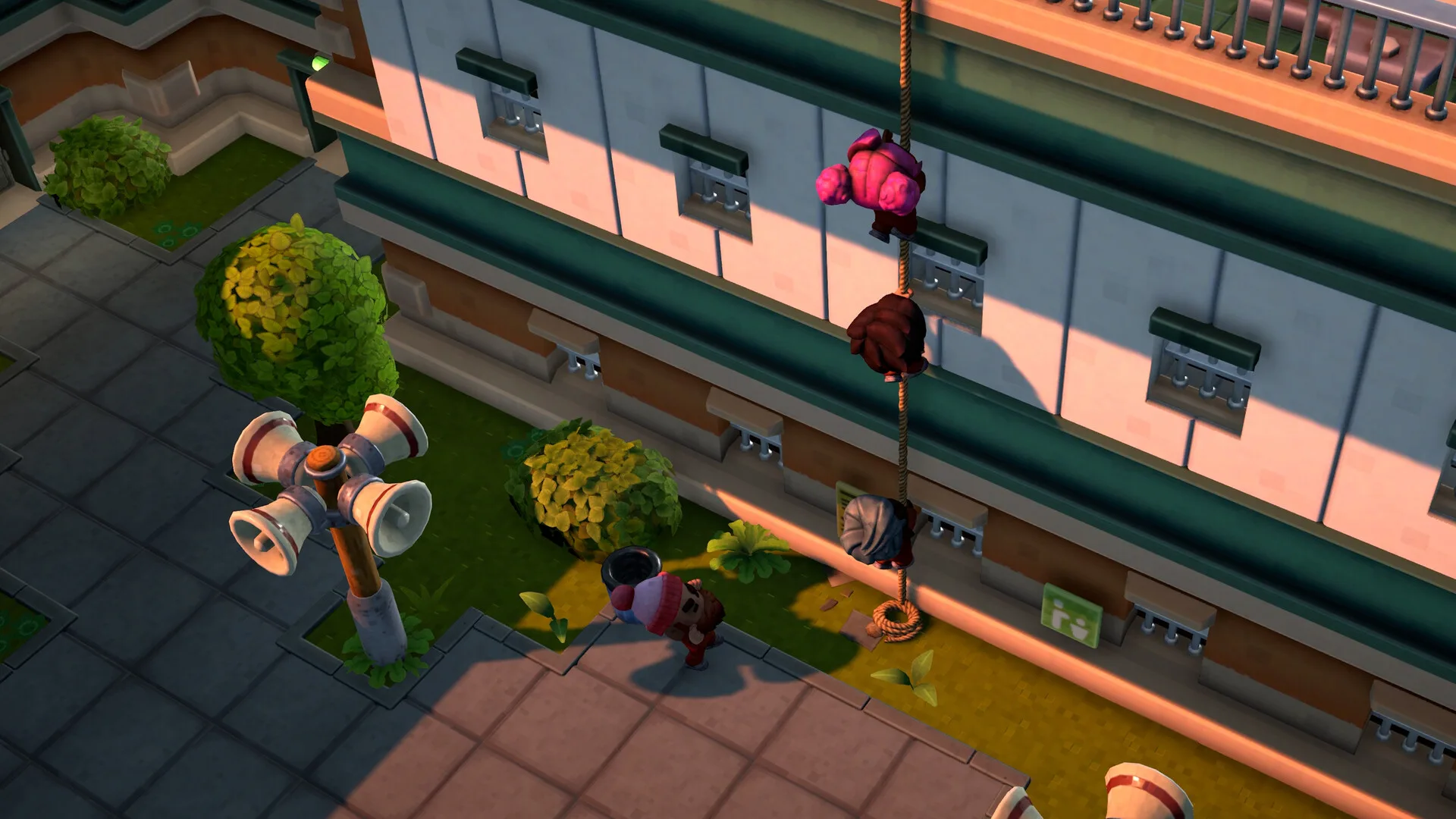
The Physics Sandbox: Escaping Is Now Physical
The confirmed physics interactions read like a slapstick toolkit:
- Drop objects from rooftops onto unsuspecting characters below.
- Shove guards down stairs — staircases being genuine 3D geometry makes this possible.
- Drag ragdolled characters — knocked-out characters react in ragdoll fashion and can be dragged around, setting up counterplays and repositioning.
Why does this matter beyond the comedy? In the older 2D games, conflict was largely abstract — stats and timers resolving off-screen. Here, the space itself is a tool. A staircase is a weapon, a rooftop is a firing position, and a body is an obstacle you can place. How deeply the physics model simulates (versus animates) remains to be tested at launch, but the interactions above are explicitly confirmed, not inferred.
The XP Skill System: Two Confirmed Skills
Progression has been rebuilt around XP earned through play, spent on skills you choose — explicitly designed so your inmate reflects how you want to escape. Skills carry across prisons, and there are no job locks on them, which has direct multiplayer implications covered in the multiplayer guide.
Two skills are confirmed by name so far:
- Vision cones — see the sight lines of guards and security cameras, turning the stealth layer from memorized guesswork into readable information.
- Hinge Buster — rip an entire door off its hinges, described as extremely loud. A sabotage tool with a built-in alarm cost.
The full skill tree has not been published, so no build orders yet. One deliberate unknown worth flagging: official materials say nothing about the older games’ strength, speed and intellect stats or the opinion system — whether they survive alongside XP skills is unconfirmed, and we will not presume either way.
Escaping Doesn’t End at the Wall
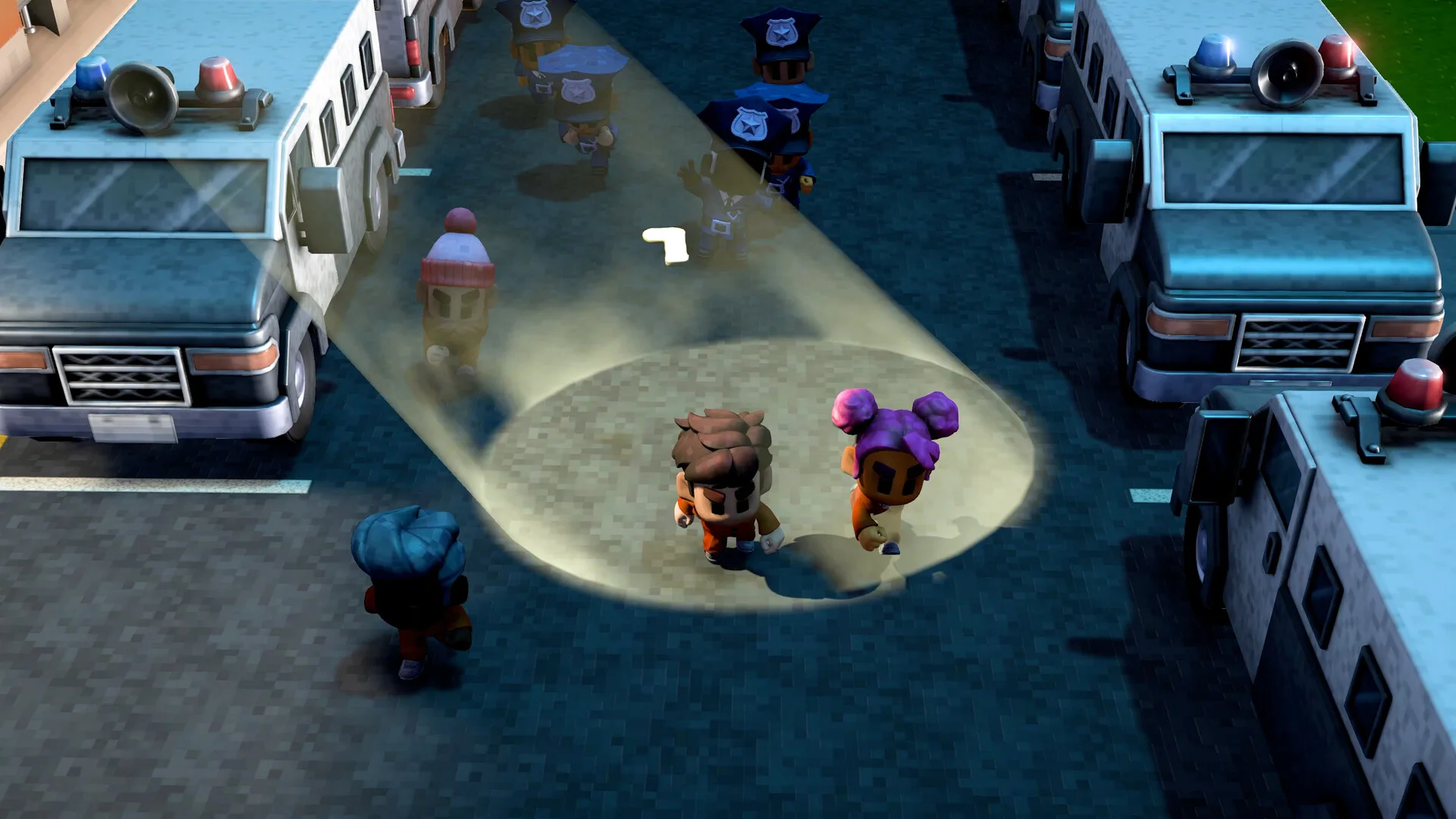
A structural change with real design weight: the escape continues outside the prison. Once over the outer wall, you keep control of your inmate through an outside escape sequence across four confirmed zone types — dense forests, gusty canyons, ancient catacombs, and dangerous waters — while guards and searchlights keep hunting you. Prison configuration and routine details per facility are covered in the five prisons overview.
Every Confirmed Escape Method
Combined from official press coverage, this is the full list of confirmed escape tools and techniques:
| Method | What it involves |
|---|---|
| Vent crawlspaces | Moving through the prison’s ventilation network |
| Wire cutters | Breaching fences — one of the few items confirmed by name |
| Rope climbing | Scaling with rope gear |
| Roof glider / paraglider | Launching from rooftops to cross distance from above |
| Rappelling | Descending from height under control |
| Disguise | Passing as someone who belongs |
| Tunneling | The series-classic dig, now with real vertical geometry to respect |
The glider in particular only exists because the game is 3D — vertical space is now escape space. Each prison’s secrets (hidden zones like the warden’s pool are confirmed) will determine which methods fit where; that mapping is post-launch work and this page will grow into it.
Jobs, Money and the Economy Loop
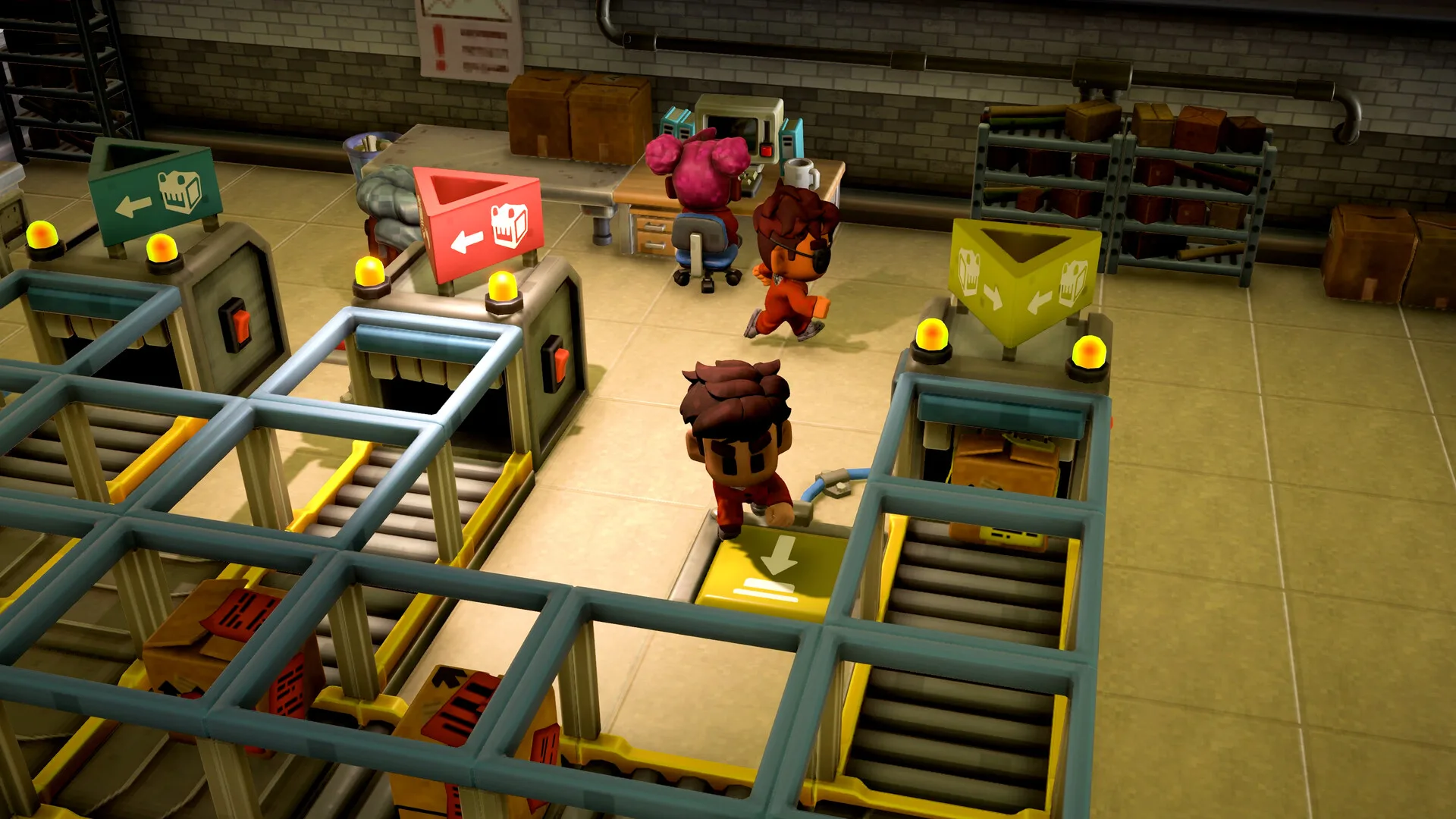
The daily routine layer is confirmed to be redesigned, not removed: you still work jobs for money and keep up the appearance of a model inmate, with Team17 describing the jobs system as rebuilt to stay interesting over the long term. The specific job types are not yet announced. The confirmed economy has three income channels — job wages, trading with fellow inmates, and theft/scavenging — feeding the crafting and contraband loop itemized in our items and weapons overview.
Why the Overhaul Is a Genuine Reinvention
Stack the confirmed changes — full 3D spaces, physics interactions, cross-prison XP skills, post-wall escape sequences with vertical options, redesigned jobs, four-player online play — and the third game is not an incremental sequel to the 2017 entry; it is a rebuild of the loop in a new dimension. Whether that lands with the fanbase is exactly the 2027 question the community is already arguing about. What is confirmed today is documented above, the release window is tracked here, and every new official detail will extend this page with dates attached.
Related Articles
guides TE3-005
Everything We Know About The Escapists 3 (Verified Facts Only)
Every verified fact about The Escapists 3 in one place: announcement, platforms, 3D gameplay, skills, prisons, multiplayer, items, and open questions.
guides TE3-003
The Escapists 3 Multiplayer: Split-Screen, Co-op & Crossplay
The Escapists 3 supports 2-player local split-screen, 4-player online co-op, mixed split-screen plus online play, and crossplay. Here is everything confirmed.
items TE3-008
The Escapists 3 Items and Weapons: The 120+ Confirmed
The Escapists 3 promises 120+ items and weapons to scavenge and craft, from wire cutters to a rooftop glider. Here is every confirmed detail.
Was this helpful?
Thanks for the feedback!